Korean Bibimbap
Highlighted under: International World Food Ideas
Korean Bibimbap is a vibrant and nutritious dish that combines rice with a variety of colorful vegetables, protein, and a spicy sauce, creating a delightful culinary experience.
Korean Bibimbap is not just a meal; it's a celebration of flavors and textures. This dish embodies the essence of Korean cuisine, where fresh ingredients and bold flavors come together in harmony. Each ingredient in bibimbap represents a key component of Korean culture, making it a deeply meaningful dish.
Why You Will Love This Recipe
- Rich variety of flavors with each bite
- Customizable with your favorite vegetables and proteins
- A wholesome meal packed with nutrients
The Essence of Bibimbap
Bibimbap, which translates to 'mixed rice', is a beloved staple of Korean cuisine known for its stunning presentation and balance of flavors. This dish is a perfect representation of Korean culinary philosophy, emphasizing harmony between various ingredients. Each component, from the vibrant vegetables to the protein, contributes not just to the taste but also to the overall nutrition of the meal. As you dig in, the combination of textures and flavors creates a delightful experience that is both satisfying and nutritious.
The origin of bibimbap dates back to the late 19th century, and it has evolved into numerous regional varieties. Traditionally, the dish was served as a royal meal, prepared with seasonal ingredients and often topped with beef or other proteins. Today, it's a versatile dish enjoyed by many, with countless variations allowing for individual preferences. Whether you prefer it vegetarian or with a protein of your choice, bibimbap is a dish that invites creativity and personalization.
Nutritional Benefits
Korean Bibimbap is not only delicious but also packed with nutrients, making it a wholesome meal choice. The base of white rice provides carbohydrates for energy, while the array of colorful vegetables delivers essential vitamins and minerals. Spinach, for example, is rich in iron and calcium, while carrots add a boost of beta-carotene. Bean sprouts contribute fiber and protein, ensuring a balanced meal that supports overall health.
Adding a protein source, such as a sunny-side-up egg or marinated beef, enhances the dish's nutritional profile. Eggs are an excellent source of high-quality protein, healthy fats, and various vitamins. This combination of ingredients ensures that every bite is not only flavorful but also nourishing, making bibimbap a great option for those seeking healthier meal choices without sacrificing taste.
Customizing Your Bibimbap
One of the most enjoyable aspects of preparing bibimbap is its versatility. You can easily customize the dish based on your taste preferences or dietary needs. Feel free to swap out vegetables, such as using bell peppers, radishes, or even sweet potatoes. If you're looking for a protein alternative, tofu or chicken can make excellent substitutes for a vegetarian or lighter option, respectively. This flexibility allows you to experiment and find your perfect combination.
Moreover, the spiciness of bibimbap can be adjusted to suit your palate. If you prefer a milder flavor, reduce the amount of gochujang or serve it on the side. For those who crave heat, don’t hesitate to add more gochujang or top it with sliced fresh chilies. The ability to tailor the dish to your liking makes bibimbap not just a meal but a canvas for culinary creativity.
Ingredients
For the Bibimbap
- 2 cups cooked white rice
- 1 cup spinach, blanched
- 1 carrot, julienned
- 1 zucchini, julienned
- 1 cup bean sprouts, blanched
- 1 cup shiitake mushrooms, sautéed
- 4 eggs
- 2 tablespoons sesame oil
- 2 tablespoons gochujang (Korean red pepper paste)
- Sesame seeds for garnish
- Green onions for garnish
Mix all the ingredients together before serving for the best flavor!
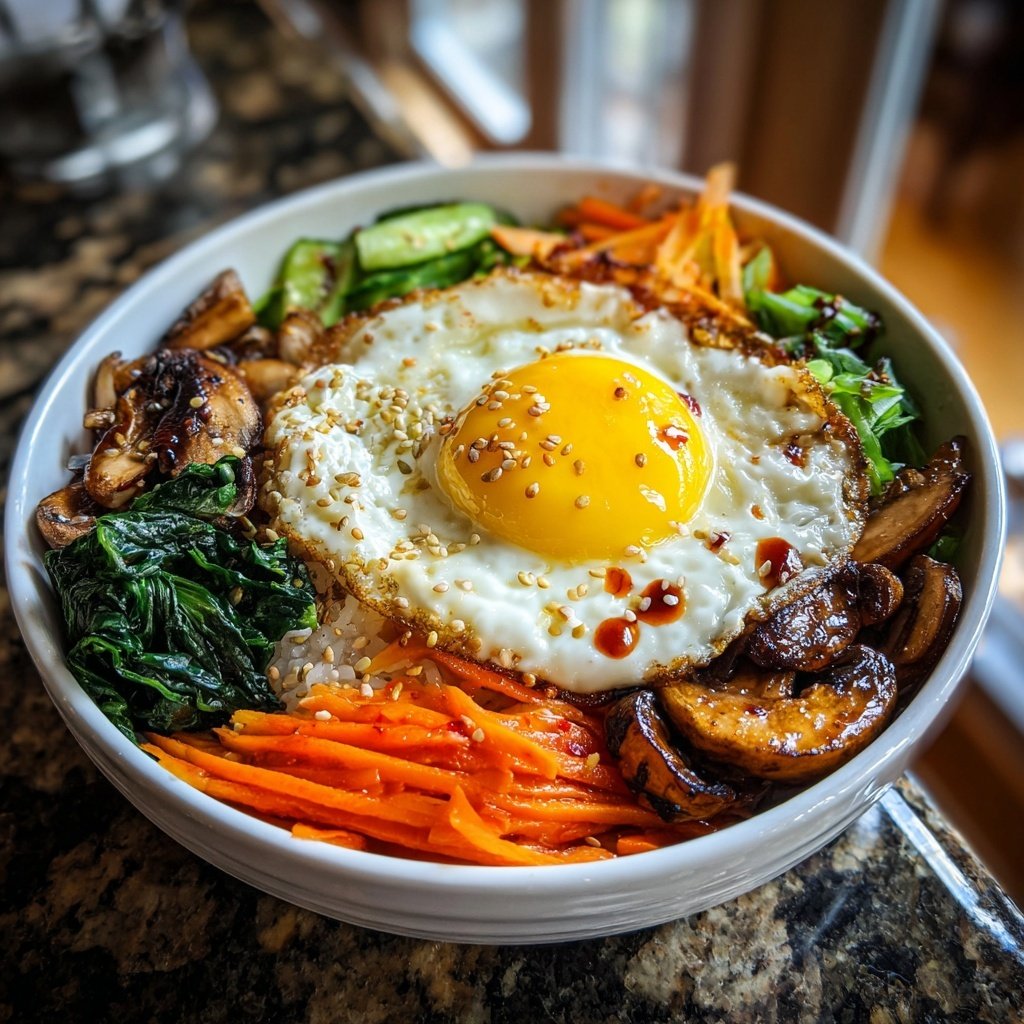
Instructions
Prepare the Vegetables
In a large skillet, heat a tablespoon of sesame oil over medium heat. Sauté zucchini and carrot separately until tender. Remove from the skillet and set aside.
Cook the Eggs
In the same skillet, fry the eggs sunny-side up until the whites are set but the yolks are still runny.
Assemble the Bibimbap
In a large bowl, place a serving of rice at the bottom. Arrange the sautéed vegetables, bean sprouts, and spinach on top of the rice. Place the fried egg on top.
Add Gochujang
Drizzle gochujang and sesame oil over the top. Garnish with sesame seeds and green onions.
Serve
Mix all the ingredients together before serving. Enjoy your homemade Korean Bibimbap!
Feel free to customize your Bibimbap with different proteins like chicken or tofu!
Pro Tips
- For a vegetarian option, omit the egg or replace it with tofu. Adjust the amount of gochujang to your spice preference.
Serving Suggestions
Korean Bibimbap is a complete meal on its own, but you can enhance the dining experience with additional side dishes. Traditional Korean sides, known as banchan, such as kimchi or pickled vegetables, complement the flavors of bibimbap beautifully. These side dishes not only add variety but also introduce additional textures and tastes, elevating your meal to a new level.
For a more authentic experience, consider serving your bibimbap in a hot stone bowl, known as dolsot. This method creates a crispy rice layer at the bottom, adding an enjoyable crunch to each bite. The hot bowl keeps the ingredients warm and allows the flavors to meld together, making every serving a delightful experience.
Storage and Reheating
If you have leftovers, storing your bibimbap correctly ensures you can enjoy it later without compromising taste or texture. Store each component separately in airtight containers in the refrigerator. This prevents the vegetables from becoming soggy and maintains the freshness of each ingredient. Bibimbap can typically be stored for up to three days in the fridge.
When it’s time to enjoy your leftovers, simply reheat the rice and vegetables in a skillet or microwave. If you have a fried egg, it's best to cook a fresh one to maintain its texture. With a little effort, you can savor a delicious meal that tastes just as good as when it was first prepared.
Questions About Recipes
→ Can I use brown rice instead of white rice?
Yes, brown rice can be used for a healthier option, but it may require longer cooking time.
→ What other vegetables can I add?
You can add bell peppers, radishes, or any other seasonal vegetables you like.
→ Is Bibimbap served hot or cold?
Bibimbap is typically served warm, but you can enjoy it at room temperature as well.
→ Can I make Bibimbap ahead of time?
Yes, you can prepare the vegetables and rice in advance, but it's best to assemble just before serving.
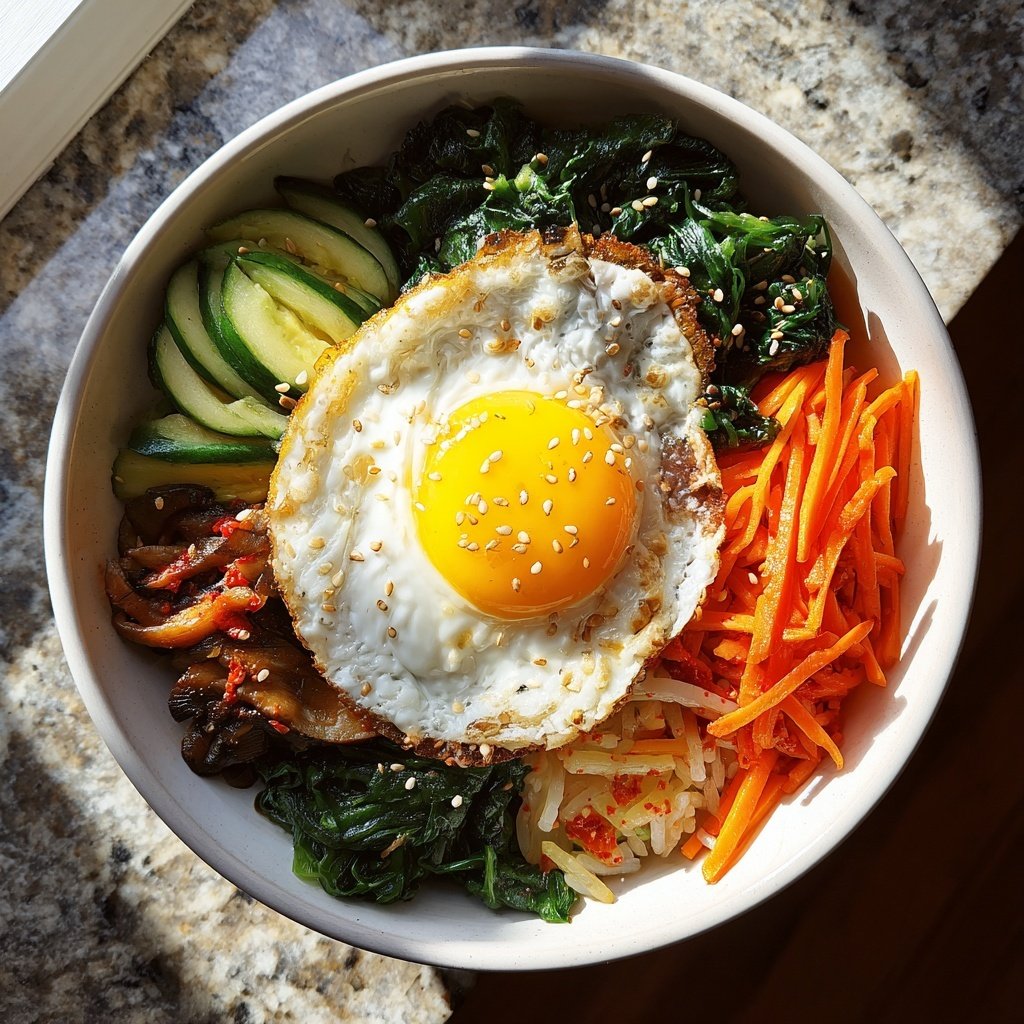
Korean Bibimbap
Created by: Sophie Adams
Recipe Type: International World Food Ideas
Skill Level: Intermediate
Final Quantity: 4 servings
What You'll Need
For the Bibimbap
- 2 cups cooked white rice
- 1 cup spinach, blanched
- 1 carrot, julienned
- 1 zucchini, julienned
- 1 cup bean sprouts, blanched
- 1 cup shiitake mushrooms, sautéed
- 4 eggs
- 2 tablespoons sesame oil
- 2 tablespoons gochujang (Korean red pepper paste)
- Sesame seeds for garnish
- Green onions for garnish
How-To Steps
In a large skillet, heat a tablespoon of sesame oil over medium heat. Sauté zucchini and carrot separately until tender. Remove from the skillet and set aside.
In the same skillet, fry the eggs sunny-side up until the whites are set but the yolks are still runny.
In a large bowl, place a serving of rice at the bottom. Arrange the sautéed vegetables, bean sprouts, and spinach on top of the rice. Place the fried egg on top.
Drizzle gochujang and sesame oil over the top. Garnish with sesame seeds and green onions.
Mix all the ingredients together before serving. Enjoy your homemade Korean Bibimbap!
Extra Tips
- For a vegetarian option, omit the egg or replace it with tofu. Adjust the amount of gochujang to your spice preference.
Nutritional Breakdown (Per Serving)
- Calories: 550 kcal
- Total Fat: 20g
- Saturated Fat: 4g
- Cholesterol: 210mg
- Sodium: 490mg
- Total Carbohydrates: 78g
- Dietary Fiber: 5g
- Sugars: 6g
- Protein: 15g