Korean Soups and Stews
Highlighted under: International World Food Ideas
Explore the rich and comforting world of Korean soups and stews, perfect for warming your soul on chilly days.
Korean soups and stews are a staple of Korean cuisine, known for their bold flavors and nourishing ingredients. Each dish tells a story of tradition and warmth, making them a beloved choice in households across Korea.
Why You'll Love This Recipe
- Hearty and satisfying with a unique blend of spices
- Packed with fresh vegetables and protein
- Perfect for sharing with family and friends
The Heart of Korean Cuisine
Korean cuisine is celebrated for its bold flavors and diverse ingredients, and soups and stews hold a special place in its heart. These dishes not only provide nourishment but also embody the warmth of Korean hospitality. Whether it's a rainy day or a family gathering, a hearty stew brings people together, making it a staple in many Korean households.
The unique combination of spices and fermented ingredients, such as kimchi, adds a depth of flavor that is both comforting and invigorating. Each bowl of stew tells a story, reflecting the regional variations and personal touches of the cook, which is why they are so cherished in Korean culture.
Nutritional Benefits of Korean Soups and Stews
Korean soups and stews are not only delicious but also packed with nutritional benefits. The use of fresh vegetables like carrots and potatoes provides essential vitamins and minerals, while the inclusion of protein from beef or tofu helps in building and repairing tissues. Kimchi, a fermented staple, is rich in probiotics that promote gut health and boost the immune system.
Moreover, the variety of ingredients allows for a balanced meal in a single bowl. With the perfect blend of protein, carbs, and healthy fats, these dishes can be a wholesome option for any meal of the day, ensuring that you feel satisfied and energized.
Tips for Perfecting Your Stew
To elevate your Korean stew, consider marinating the beef in soy sauce and garlic for at least an hour before cooking. This step enhances the flavor and tenderness of the meat. Additionally, using homemade beef broth can significantly improve the overall taste, infusing the dish with rich, savory notes that store-bought broth may lack.
Don't hesitate to experiment with your favorite vegetables or adjust the spice levels according to your preference. Adding ingredients like mushrooms or zucchini can introduce new textures and flavors, making your stew uniquely yours. Remember, the key to a great stew is allowing it to simmer long enough for the flavors to meld beautifully.
Ingredients
For the Stew
- 1 lb beef, cut into cubes
- 4 cups beef broth
- 1 cup kimchi, chopped
- 1 medium onion, sliced
- 2 carrots, sliced
- 2 potatoes, diced
- 3 cloves garlic, minced
- 2 tablespoons soy sauce
- 1 tablespoon gochujang (Korean chili paste)
- 1 teaspoon sesame oil
- Salt and pepper to taste
- Green onions for garnish
These ingredients will create a delicious base for your Korean stew.

Instructions
Prepare the beef
In a large pot, heat the sesame oil over medium heat. Add the beef cubes and sear until browned on all sides.
Add vegetables and broth
Add the onions, garlic, carrots, and potatoes to the pot. Stir for a few minutes, then pour in the beef broth.
Incorporate kimchi and seasonings
Add the chopped kimchi, soy sauce, gochujang, salt, and pepper. Stir to combine all ingredients.
Simmer the stew
Bring the mixture to a boil, then reduce the heat and let it simmer for about 30 minutes, or until the beef and vegetables are tender.
Serve
Garnish with chopped green onions and serve hot with steamed rice on the side.
Enjoy your hearty Korean stew with family or friends!
Pro Tips
- For a spicier stew, adjust the amount of gochujang to your taste. You can also add tofu for extra protein.
Serving Suggestions
Korean soups and stews are best enjoyed hot and fresh, often accompanied by steamed rice, which perfectly balances the richness of the dish. You can also serve it with traditional side dishes, known as banchan, such as pickled vegetables or seasoned greens, to create a complete meal.
For a more casual dining experience, consider serving the stew in individual bowls, allowing guests to customize their toppings with additional green onions or a sprinkle of sesame seeds. This not only enhances the presentation but also invites everyone to engage with the dish more personally.
Storage and Reheating Tips
Leftover Korean stew can be stored in an airtight container in the refrigerator for up to three days. The flavors will continue to develop and deepen, making it even more delicious on the second day. For longer storage, you can freeze the stew for up to three months; just ensure to let it cool completely before transferring it to freezer-safe containers.
When reheating, do so gently on the stovetop over low heat, adding a splash of water or broth if needed to maintain the desired consistency. Avoid reheating in the microwave if possible, as it can unevenly heat the stew and affect its texture.
Variations to Try
While this recipe focuses on a beef-based stew, you can easily substitute the protein to suit your dietary preferences. Chicken, pork, or even tofu work beautifully in this dish, providing a lighter option without compromising on flavor. For a vegetarian version, simply omit the meat and increase the amount of vegetables and tofu.
Consider adding different types of kimchi, such as radish or cucumber kimchi, to introduce new flavor profiles. You can also play with the spice levels by adjusting the amount of gochujang or adding other chili pastes to cater to your heat tolerance.
Questions About Recipes
→ Can I use chicken instead of beef?
Yes, you can substitute chicken for beef in this recipe. Just adjust the cooking time accordingly.
→ Is this stew spicy?
The spiciness comes from the gochujang. You can reduce the amount for a milder flavor.
→ Can I make this stew in advance?
Absolutely! This stew tastes even better the next day, as the flavors continue to develop.
→ What can I serve with this stew?
This stew pairs well with steamed rice, pickled vegetables, or Korean side dishes (banchan).
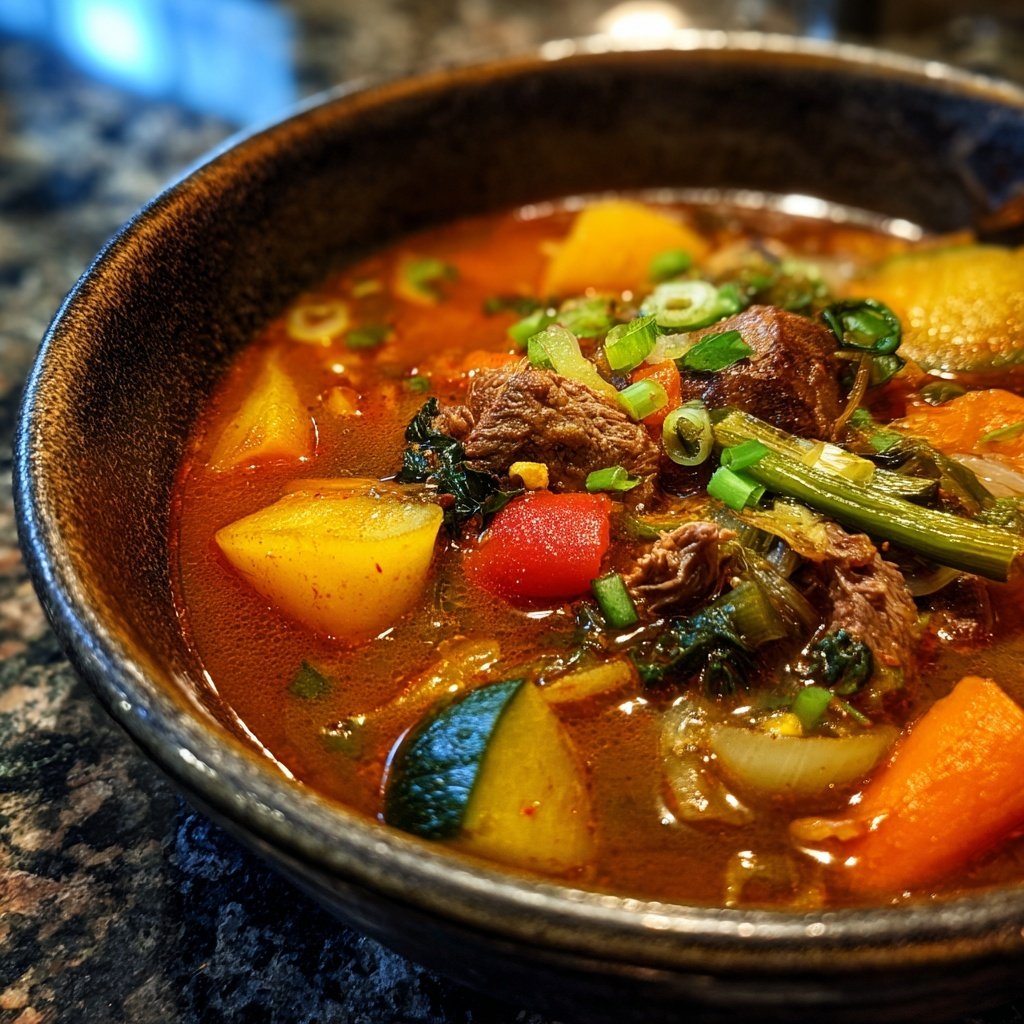
Korean Soups and Stews
Created by: Sophie Adams
Recipe Type: International World Food Ideas
Skill Level: Intermediate
Final Quantity: 4 servings
What You'll Need
For the Stew
- 1 lb beef, cut into cubes
- 4 cups beef broth
- 1 cup kimchi, chopped
- 1 medium onion, sliced
- 2 carrots, sliced
- 2 potatoes, diced
- 3 cloves garlic, minced
- 2 tablespoons soy sauce
- 1 tablespoon gochujang (Korean chili paste)
- 1 teaspoon sesame oil
- Salt and pepper to taste
- Green onions for garnish
How-To Steps
In a large pot, heat the sesame oil over medium heat. Add the beef cubes and sear until browned on all sides.
Add the onions, garlic, carrots, and potatoes to the pot. Stir for a few minutes, then pour in the beef broth.
Add the chopped kimchi, soy sauce, gochujang, salt, and pepper. Stir to combine all ingredients.
Bring the mixture to a boil, then reduce the heat and let it simmer for about 30 minutes, or until the beef and vegetables are tender.
Garnish with chopped green onions and serve hot with steamed rice on the side.
Extra Tips
- For a spicier stew, adjust the amount of gochujang to your taste. You can also add tofu for extra protein.
Nutritional Breakdown (Per Serving)
- Calories: 450 kcal
- Total Fat: 20g
- Saturated Fat: 8g
- Cholesterol: 75mg
- Sodium: 900mg
- Total Carbohydrates: 30g
- Dietary Fiber: 4g
- Sugars: 5g
- Protein: 30g